
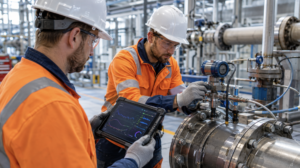
Industrial facilities depend on pressurized equipment to transport, store, and process liquids and gases safely. Pipelines, pressure vessels, boilers, storage tanks, fire-suppression equipment, and hydraulic systems must withstand demanding operating conditions without leaking or suffering a structural failure. Hydrostatic testing has long provided a dependable way to evaluate these assets, but digital technology is changing how tests are conducted, documented, and analyzed.
Modern hydrotest systems combine proven pressure-testing methods with digital sensors, automated controls, data logging, remote monitoring, and secure reporting software. Instead of relying entirely on handwritten observations and individual pressure-gauge readings, technicians can now capture detailed information throughout the test. The resulting records help companies identify abnormal pressure behavior, improve maintenance decisions, demonstrate compliance, and protect employees working around critical equipment.
This convergence of industrial testing and information technology represents an important development for manufacturers, energy companies, chemical facilities, utilities, construction contractors, and other organizations responsible for pressurized systems. It does not replace trained technicians or sound engineering judgment. It gives them better information with which to work. 🏭
The Essential Role of Hydrostatic Testing
A hydrostatic test evaluates the integrity of a pressurized component by filling it with a liquid, commonly water, and raising the internal pressure to a specified level. Technicians then monitor the equipment for leakage, deformation, pressure loss, or other evidence that it may not be suitable for service.
The general principles behind a hydrostatic test have been applied to pipelines, cylinders, boilers, plumbing systems, and pressure vessels for many years. Water is commonly selected because it is nearly incompressible and stores considerably less potential energy than compressed gas under comparable test conditions. Testing still involves serious hazards, however, and must be performed according to the applicable standards, engineering requirements, and safety procedures.
A properly planned Hydrotest can reveal problems that might otherwise remain hidden until equipment is placed under operational pressure. Weak welds, defective seals, cracks, corrosion damage, improper connections, and material deficiencies may all contribute to an unsuccessful test.
The objective is not simply to make the pressure gauge reach a target number. A complete test must establish that the equipment can safely hold the required pressure for the prescribed period without unacceptable leakage, distortion, or loss of integrity. Accurate instruments, controlled pressurization, proper isolation, qualified personnel, and complete documentation are therefore essential.
Digital Sensors Are Improving Measurement Accuracy
Traditional analog gauges remain useful, but they typically require an operator to observe and record readings at specific intervals. This method can introduce variations caused by viewing angle, timing, transcription errors, or inconsistent recordkeeping. A pressure change occurring between manual readings may never appear in the final report.
Digital pressure transducers can take measurements continuously and record them automatically. Depending on the system, pressure, temperature, flow, test duration, pump activity, and other operating conditions may be captured together. Each measurement can receive a timestamp, creating a detailed chronological record of the test.
Temperature data is particularly valuable because changing temperatures can influence pressure readings. When pressure and temperature are recorded together, engineers have better context for determining whether a pressure variation indicates leakage or reflects changing environmental conditions.
Digital instruments also make it easier to display live information in multiple locations. A technician can monitor the immediate test area while authorized personnel review the same readings from a protected control room. Remote visibility can reduce unnecessary exposure to pressurized equipment while allowing additional specialists to observe the test.
The broader movement toward connected industrial sensors reflects the expansion of the Internet of Things, which uses network-connected devices to collect, exchange, and analyze operational information. In hydrostatic testing, that connectivity can turn a single gauge reading into a comprehensive record of equipment behavior. 📊
Automation Creates More Consistent Test Procedures
Consistency is one of the greatest benefits of digital hydrotest technology. Automated controls can regulate pumps, valves, pressure increases, stabilization periods, hold times, and depressurization sequences according to predetermined test parameters.
Gradual pressurization is important because abrupt changes can place unnecessary stress on equipment and make readings more difficult to interpret. An automated system can raise pressure in controlled stages, pause at defined checkpoints, and alert the operator when readings move beyond approved limits.
Automation may also support protective responses. If the system detects an unexpected pressure spike, rapid pressure loss, sensor malfunction, or another abnormal condition, it can generate an alarm or initiate a controlled shutdown when appropriately designed to do so. These safeguards must be engineered for the specific equipment and operating environment rather than treated as universal settings.
Digital control does not remove the need for human supervision. Technicians must still inspect the test assembly, confirm that connections are secure, verify sensor calibration, establish exclusion zones, follow written procedures, and respond appropriately to changing conditions. Automation strengthens a well-designed process; it cannot compensate for careless preparation or inadequate training.
Real-Time Data Helps Detect Problems Earlier
A printed pressure chart or a few handwritten readings can confirm that a test occurred, but continuous digital data can reveal far more about what happened during it. Software can display pressure curves, compare actual performance with expected behavior, and highlight deviations that deserve further investigation.
A very small but steady pressure decline may be difficult to notice during manual observation. On a digital graph, the trend can become much clearer. Repeated fluctuations may indicate a problem with the pump, valve, connection, seal, sensor, or test configuration. Comparing pressure and temperature data can help technicians separate probable leaks from environmentally driven changes.
Trend analysis becomes even more powerful when an organization retains results from multiple tests. Engineers can compare a current test with earlier records for the same asset or with results from similar equipment. Gradual changes may reveal developing deterioration before it becomes an immediate failure.
This approach resembles predictive maintenance, which uses condition data and ongoing monitoring to anticipate equipment problems. A hydrotest is still performed according to established requirements, but its digital results can contribute to a broader understanding of asset health.
Earlier detection gives maintenance teams more time to plan. Instead of discovering a critical defect during operation, a company may be able to schedule repairs, obtain replacement components, coordinate specialized labor, and manage downtime in a more orderly manner. 🔧
Digital Records Strengthen Traceability and Compliance
Industrial test reports may be reviewed long after the work is completed. Facility managers, customers, inspectors, engineers, insurance representatives, and regulatory authorities may need evidence showing what was tested, when it was tested, which procedure was followed, what equipment was used, and whether the asset passed.
Digital platforms can collect this information in a standardized format. A test record may include the asset identification number, technician’s name, instrument serial numbers, calibration status, test pressure, hold duration, temperature readings, pressure graph, photographs, notes, approvals, and final result.
This level of traceability can reduce missing information and simplify report retrieval. It also helps organizations maintain consistent documentation across multiple facilities and testing crews. Standardized forms can require essential fields to be completed before a report is finalized, limiting the chance that important details will be omitted.
Digital signatures, controlled user permissions, revision histories, and tamper-evident audit trails can further strengthen record integrity. These features are especially important when test documentation supports regulatory compliance, customer acceptance, commissioning, warranty claims, or internal quality programs.
The safety obligations surrounding hydrostatic testing remain firmly rooted in established workplace requirements. The Occupational Safety and Health Administration, for example, describes hydrostatic testing requirements for fire-extinguisher components. Digital documentation can make compliance records easier to manage, but it does not alter the governing rule or replace application-specific requirements.
Remote Monitoring Can Reduce Personnel Exposure
Pressure-testing areas require careful control. Hoses, fittings, temporary closures, valves, and the equipment being tested may present hazards if they fail. Organizations commonly establish exclusion zones, use barriers, restrict access, inspect connections, and keep nonessential personnel away from the test area.
Wireless sensors and remote dashboards can allow technicians to observe readings from a safer location. Cameras may provide visual confirmation while the pressure and temperature data appear on a separate display. When designed correctly, this arrangement can limit the number of employees who need to remain close to the equipment while it is under pressure.
Remote monitoring is not permission to abandon the test or assume that technology will handle every problem. Communication systems can fail, sensors can produce incorrect readings, and wireless signals can be interrupted. Safe procedures should define how the test will be supervised, what happens when data is lost, and which conditions require immediate shutdown.
The strongest systems combine technology with physical safety controls. Digital monitoring, barriers, proper personal protective equipment, verified fittings, controlled pressurization, and trained personnel work together to reduce risk. 🦺
Cybersecurity Has Become Part of Industrial Safety
Connecting a hydrotest system to a computer network creates new capabilities, but it also introduces cybersecurity responsibilities. A compromised device, unauthorized configuration change, infected laptop, or insecure remote connection could affect data accuracy or system availability.
Industrial organizations should protect connected testing equipment through access controls, strong authentication, network segmentation, secure configurations, software updates, protected backups, and documented recovery procedures. Only authorized personnel should be able to change test parameters or approve final reports.
The National Institute of Standards and Technology’s guidance on industrial control system security emphasizes that industrial environments have distinct performance, reliability, and safety requirements. Cybersecurity measures must account for operational realities rather than simply copying practices from ordinary office networks.
The Cybersecurity and Infrastructure Security Agency also provides resources addressing risks to industrial control systems and operational technology. These principles matter even when a connected hydrotest unit appears to be a small part of the facility. Every networked device can become a potential point of entry or a source of unreliable information if it is not properly managed.
Cybersecurity also supports confidence in the test record. Companies must be able to trust that recorded measurements are authentic, settings were not altered without authorization, and reports remain unchanged after approval.
Integration Supports Better Asset Management
Digital hydrotest systems become more valuable when their records connect with the organization’s existing maintenance and asset-management processes. A completed report can be linked to a specific pipeline segment, tank, vessel, cylinder, or component within a computerized maintenance management system.
When a test identifies a concern, the platform may generate an inspection request, maintenance order, or engineering review. When the asset passes, the system can update its status and retain the supporting documentation. This reduces duplicate data entry and helps keep information associated with the correct piece of equipment.
Integration also gives decision-makers a broader view of facility performance. They can examine failure rates by equipment type, compare results across locations, identify recurring defects, review contractor performance, or track how long repairs take after unsuccessful tests.
Over time, reliable data can influence purchasing and design decisions. If one type of component repeatedly performs poorly, procurement teams can investigate alternatives. If failures frequently occur at a particular connection or weld configuration, engineers can review the design and installation process.
The goal is not to collect information merely because storage is inexpensive. Data has value when it leads to safer procedures, stronger equipment, clearer accountability, and better operational decisions.
Successful Adoption Requires Planning and Training
Purchasing digital equipment is only the beginning. Organizations need written procedures explaining how instruments will be calibrated, how data will be validated, where records will be stored, who may change test settings, and how technicians should respond to alarms or equipment failures.
Training should cover both the pressure-testing procedure and the digital platform. A technician who understands the physical test but cannot recognize a failed sensor may rely on misleading information. Conversely, an employee who understands software but lacks pressure-testing knowledge may overlook a serious field hazard.
Companies should also avoid collecting more information than they can effectively manage. The most useful systems present essential data clearly, preserve the original measurements, and make exceptions easy to identify. Complicated dashboards filled with unnecessary indicators can distract from the conditions that matter most.
A phased implementation often works well. An organization can begin with digital data logging, establish reliable procedures, train its employees, and then add remote monitoring, automated controls, system integrations, or advanced analysis when the operational need is clear.
Conclusion
Digital hydrotest systems are bringing greater precision, consistency, traceability, and visibility to one of industry’s most important safety practices. Continuous sensor readings can expose subtle pressure changes, automated controls can support repeatable procedures, and centralized records can make test results easier to verify and retrieve.
The technology also brings new obligations. Sensors require calibration, automated sequences require careful engineering, networked equipment requires cybersecurity protection, and employees require proper training. Digital tools must operate within established safety standards and under the direction of qualified professionals.
When those foundations are in place, hydrostatic testing becomes more than a pass-or-fail event. It becomes a valuable source of equipment intelligence. By combining proven testing principles with modern IT, industrial organizations can identify weaknesses earlier, make better maintenance decisions, strengthen compliance records, and improve the reliability of the systems on which their operations depend. ✅