
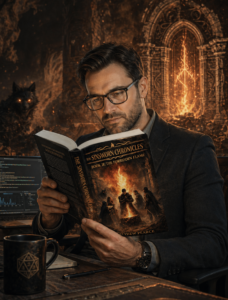
IT consultants live in a world where the obvious problem is rarely the only problem. A server goes down, but the real issue may be aging infrastructure. A client complains about software performance, but the deeper concern may be poor internal processes. A cybersecurity scare appears to be one isolated incident, but underneath it may be years of ignored warnings, outdated systems, weak passwords, and leadership that kept pushing technology decisions further down the road.
That is why The Sinsworn Chronicles, Book II: The Forbidden Flame offers more than entertainment. At first glance, it belongs in the world of epic fantasy books, but the themes inside the story connect powerfully with the daily life of an IT consultant. Strategy matters. Pressure reveals character. Hidden threats do not stay hidden forever. When leaders fail to recognize danger early, the consequences can grow far beyond what they expected.
For IT consultants, this kind of story becomes a mirror. The battles may be fictional, the world may be imagined, and the stakes may be wrapped in fantasy, but the lessons feel very real. Modern businesses are under pressure from artificial intelligence, cybersecurity risk, rising technology costs, talent shortages, and fast-changing customer expectations. Gartner has projected worldwide IT spending to reach $6.15 trillion in 2026, showing how much organizations are investing in technology while trying to keep up with change. Gartner
Strategy Begins Before the Crisis
One of the strongest lessons IT consultants can take from The Forbidden Flame is that strategy cannot begin after the danger is already at the door. In fantasy, kingdoms fall when leaders wait too long to act. In business, companies struggle when they treat technology as an afterthought instead of a foundation.
A good IT consultant understands that strategy is not just about fixing what is broken. It is about seeing what is coming, preparing the organization, and helping decision-makers understand the cost of delay. That includes infrastructure planning, cybersecurity readiness, cloud strategy, data protection, automation, vendor selection, and long-term digital growth.
This is especially important now because technology is no longer a side department. It sits at the center of operations, sales, marketing, customer service, finance, logistics, and leadership. Deloitte’s Tech Trends 2026 report highlights how organizations are moving from experimentation to real impact as technology innovation accelerates. Deloitte
That means IT consultants have to think like strategists, not just technicians. They need to help clients connect technology decisions to business outcomes. A recommendation is stronger when it is tied to revenue protection, customer experience, operational efficiency, compliance, and long-term resilience.
In The Forbidden Flame, strategy is not passive. It requires awareness, timing, courage, and the willingness to act before every answer is comfortable. That is the same mindset consultants need when advising clients who are overwhelmed, underprepared, or unsure where to begin.
Pressure Reveals the Strength of the System
Pressure has a way of exposing what was already weak. In a fantasy story, pressure may come through battle, betrayal, fear, or a rising threat that can no longer be ignored. In IT consulting, pressure comes through downtime, cyberattacks, failed migrations, budget cuts, employee frustration, and urgent client demands.
The important lesson is this: pressure does not usually create the weakness. It reveals it.
A company may believe its systems are stable until one outage brings operations to a stop. A leadership team may believe its cybersecurity plan is “good enough” until a phishing attack exposes gaps in training. A business may think its technology budget is manageable until AI costs, software subscriptions, and infrastructure needs begin stacking up. Recent reporting from CIO noted Gartner’s revised forecast showing stronger projected IT spending growth in 2026, with AI infrastructure helping lead the increase. CIO
This is where IT consultants become valuable guides. They can help businesses prepare for pressure before it becomes painful. That might mean developing a disaster recovery plan, improving backup systems, strengthening endpoint protection, documenting processes, or helping leadership understand the true cost of technical debt.
The best consultants do not simply wait for the client to panic. They educate. They show risk clearly. They explain options in plain language. They help leaders make decisions before urgency removes their ability to think clearly.
Hidden Threats Are Often the Most Expensive
The title The Forbidden Flame carries the feeling of something powerful, dangerous, and difficult to contain. For IT consultants, that idea translates directly into one of the biggest challenges in business technology: hidden threats.
Hidden threats can take many forms. They may be outdated software, unpatched systems, weak access controls, undocumented admin privileges, untrained employees, poor vendor oversight, or sensitive data stored in the wrong place. They may also come from the belief that “it has worked fine so far,” which is one of the most dangerous assumptions a business can make.
Cybersecurity is one of the clearest examples. The World Economic Forum’s Global Cybersecurity Outlook 2026 explains that cybersecurity trends continue to affect economies and societies, not just individual companies. World Economic Forum
For an IT consultant, this reinforces the importance of speaking up early. Clients may not always want to hear that their systems are vulnerable. They may not want another expense. They may not want to slow down long enough to fix the foundation. But the cost of ignoring hidden threats is almost always higher than the cost of addressing them.
In fantasy, ignored threats grow in the shadows. In business, they grow in neglected dashboards, outdated documentation, skipped updates, and leadership meetings where technology risk gets pushed aside for another quarter.
A Consultant Must See What Others Miss
The best IT consultants are not valuable simply because they know software, hardware, networks, or cybersecurity. They are valuable because they can see patterns others miss.
That is one reason The Forbidden Flame connects so well with the consulting mindset. Stories built around danger, loyalty, power, and consequence often require characters to look beyond the surface. They must recognize small signs before they become major turning points. They must understand that what looks like one problem may actually be connected to something much larger.
IT consultants do this constantly. A slow system may point to poor architecture. Repeated employee workarounds may point to bad software fit. Frequent support tickets may point to weak training. Missed project deadlines may point to a deeper disconnect between leadership goals and technical capacity.
According to Wikipedia’s overview of information technology consulting, IT consulting focuses on advising organizations on how to use information technology to meet business objectives. That definition matters because it places consulting in the role of guidance, not just repair. A consultant is there to help the business move toward a stronger outcome.
This kind of guidance requires discernment. IT consultants have to listen carefully, ask better questions, and translate complex issues into decisions a business owner or executive can actually act on. They must also avoid the trap of only solving the problem the client names, because the named problem is not always the real one.
Technology Without Leadership Creates Risk
Another lesson IT consultants can take from The Forbidden Flame is that power must be governed wisely. In fantasy, power without wisdom often leads to destruction. In business, technology without leadership creates confusion, waste, and risk.
AI is a strong example. Companies want the benefits of automation, faster workflows, better insights, and competitive advantage. But AI also brings challenges around cost, governance, security, accuracy, employee adoption, and ethical use. McKinsey’s Technology Trends Outlook 2025 identifies major technology trends shaping business, including artificial intelligence and agentic AI. McKinsey & Company
For IT consultants, this creates a major opportunity. Clients need help choosing tools, building policies, protecting data, training teams, and measuring results. They need someone who can separate excitement from strategy. They need someone who can say, “This tool may be powerful, but here is how we make sure it actually serves the business.”
That is leadership. It is not fear-based. It is not overly technical. It is clear, grounded, and focused on the client’s long-term success.
In The Forbidden Flame, power is never neutral. It has consequences based on who uses it, why they use it, and whether they understand what they are handling. The same is true in business technology. A powerful system used carelessly can create more problems than it solves. A powerful system guided wisely can help a business grow stronger.
Communication Can Be the Difference Between Trust and Panic
IT consultants often operate between technical teams and non-technical leaders. That means communication is not a soft skill. It is a survival skill.
A consultant may understand the risk perfectly, but if they explain it poorly, the client may ignore it. A consultant may know the right solution, but if the client feels overwhelmed, confused, or pressured, they may delay the decision. This is why the best consultants know how to communicate with clarity and calm.
The Forbidden Flame reminds readers that pressure-filled moments require more than intelligence. They require courage, timing, and the ability to help others understand what is truly at stake.
In consulting, this may mean turning technical language into business language. Instead of saying, “Your endpoints lack sufficient protection,” a consultant may say, “Your team’s computers are not protected strongly enough, and one wrong click could put your files, customer data, and operations at risk.” That kind of explanation helps the client understand the danger without feeling talked down to.
Trust grows when clients feel guided, not embarrassed. Strong communication helps clients make better decisions because they finally understand why the recommendation matters.
The Cost of Delay Is Usually Paid Later
One of the most important lessons from both fantasy and IT consulting is that delayed action has a cost. Leaders may postpone decisions because they are busy, cautious, underfunded, or unsure whom to trust. But delay does not freeze the threat. It often gives the threat more room to grow.
For IT consultants, this shows up in many familiar ways. A company delays a website rebuild and loses leads. It delays cybersecurity improvements and faces a breach. It delays cloud modernization and struggles with performance. It delays replacing outdated software and watches employees create inefficient workarounds. It delays data cleanup and then cannot trust its own reporting.
The consultant’s job is not to create panic. The consultant’s job is to create clarity.
A strong consultant helps the client see the difference between a manageable issue today and a major problem tomorrow. That is where strategy, pressure, and hidden threats all meet. Businesses do not need fear. They need foresight. They need someone willing to point out what is being missed and offer a practical way forward.
Conclusion
The Sinsworn Chronicles, Book II: The Forbidden Flame may be a fantasy novel, but its deeper themes reach into the real world of business, leadership, and technology. IT consultants can learn from the way the story treats strategy, pressure, hidden danger, and the consequences of ignoring what should have been addressed sooner.
The modern IT consultant is not just a fixer. A consultant is a guide, translator, strategist, risk spotter, and trusted voice in moments when businesses feel overwhelmed by change. As companies continue investing in AI, cybersecurity, cloud systems, automation, and digital transformation, they need consultants who can see beyond the obvious and help them make wiser decisions.
That is the powerful connection between The Forbidden Flame and the work of IT consulting. The setting may be fantasy, but the lesson is practical: hidden threats matter, pressure reveals weakness, and strategy must begin before the crisis arrives.